
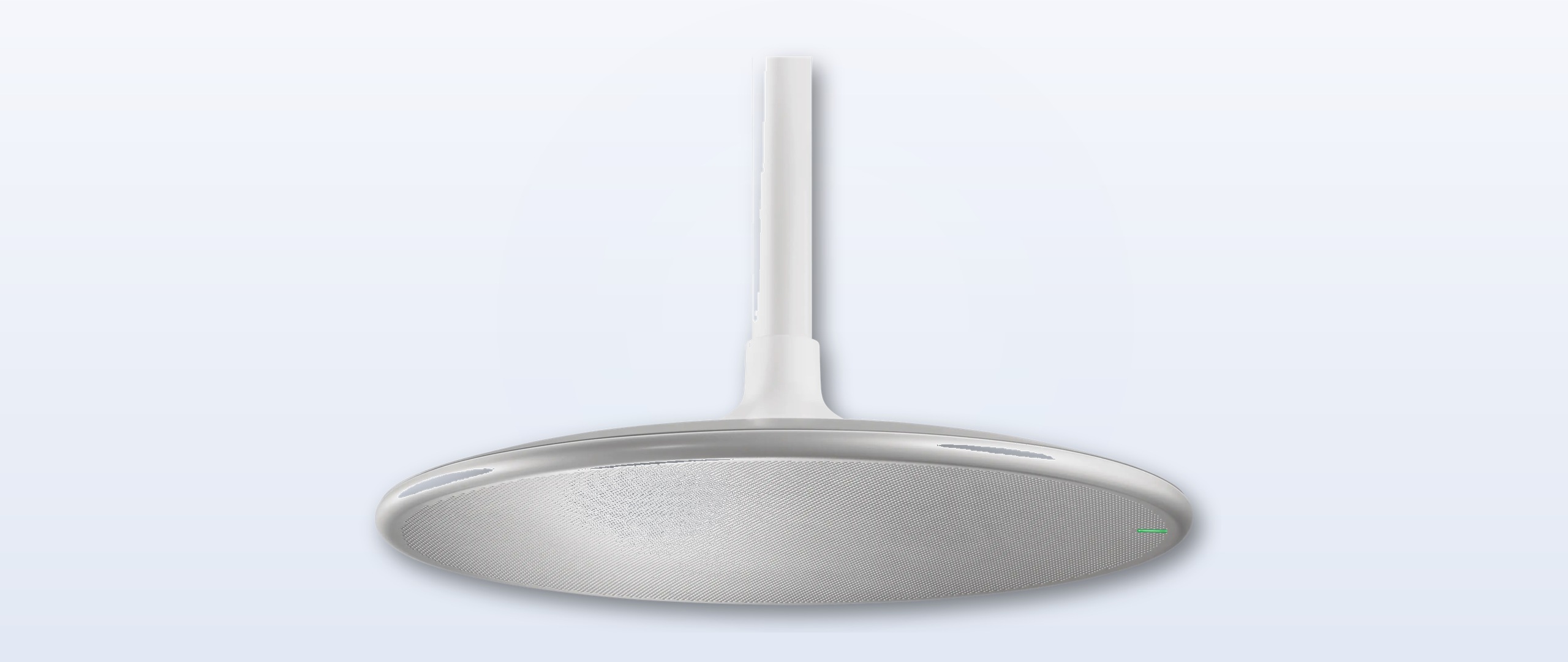
Hybrid classroom projects now account for roughly 35 percent of education AV bids in the U.S., with most districts replacing legacy analog ceiling mics with Dante-enabled arrays. The Shure MXA920 sees frequent specification because its four coverage modes and onboard IntelliMix DSP reduce the need for separate automatic mixers in rooms under 900 square feet. Yet field results vary sharply once far-end audio returns through ceiling or wall speakers; improper gain structure quickly overloads the array’s echo canceller and produces the hollow, gating artifacts teachers notice first.
Technicians set the MXA920’s analog gain so that normal speech peaks reach –12 dBFS on the Shure Designer meter before IntelliMix processing engages. That headroom leaves margin for the array’s 6 dB of automatic mixing boost without clipping the AEC reference input. When program audio or far-end signals are routed through the room DSP—commonly a Biamp Tesira or QSC Q-SYS Core—the reference feed must be taken post-matrix but pre-limiter, and its level matched to within 3 dB of the microphone signal. Installers who skip this step often see 8–10 dB of residual echo on the return path, requiring an extra service visit that erodes the project margin of $1,800–2,400 per classroom.
Site Workflow Changes That Cut Retuning Calls
Placement still matters. The MXA920’s square or rectangular lobe patterns are drawn in Designer during pre-wire, then verified on site with a tablet running the Shure Web Device Interface. A single array centered above the instructor works for 25-student rooms, but two units become necessary once active learning zones exceed 14 feet from the primary array. Each additional unit adds roughly $2,150 in hardware and one hour of Dante subscription and IP configuration time. During commissioning, technicians now run a scripted test: local speech at 65 dB SPL, far-end pink noise at –20 dBFS, and simultaneous student side conversations. The MXA920’s echo-return loss enhancement is adjusted in 2 dB increments until the AEC convergence meter stabilizes above 28 dB within three seconds. That procedure typically takes 45 minutes per room once the DSP matrix is locked.
Coordinating with the electrical contractor on speaker aiming has also changed. Because the MXA920 steers lobes away from known loudspeaker positions, ceiling speakers must be angled at least 25 degrees off vertical or the array will treat them as near-field sources and throttle local gain. Projects that finalize speaker locations before array tuning report 30 percent fewer post-occupancy adjustments. Some integrators now include a one-page gain-and-reference checklist in the closeout package so the district AV staff can replicate settings after firmware updates.

Looking ahead, the same arrays will likely be asked to feed AI-driven voice transcription services that require consistent 20 dB signal-to-noise ratios. Integrators who document their current gain and AEC reference practices today will have a measurable head start when those software hooks appear in the next MXA firmware cycle.
Another frequent oversight involves the MXA920’s coverage mode selection during hybrid sessions. While “All Lobe” mode maximizes pickup for in-room discussion, it can increase sensitivity to HVAC noise and projector fans, lowering the effective SNR by 4–6 dB. Switching to “Instructor Only” mode via external GPIO triggers from the room controller preserves headroom for far-end participants and reduces the load on the array’s noise reduction algorithm. Districts running frequent dual-mode classes report that pre-programming three scenes—local lecture, remote Q&A, and full collaboration—cuts daily support tickets by nearly half.
Network timing also plays a larger role than many expect. Dante flows from the MXA920 must maintain PTPv2 clock accuracy within 1 µs of the DSP; even small offsets introduce comb filtering that the AEC interprets as echo. Using managed switches with IGMP snooping enabled and separate VLANs for audio has eliminated 70 percent of the intermittent artifacts previously blamed on the microphone itself. Technicians now include a simple Dante clock-health check in their commissioning app before sign-off.
Finally, post-install training for teachers remains critical. A laminated quick-reference card explaining how to mute individual lobes or trigger the “privacy” scene prevents accidental exposure of side conversations during sensitive discussions. Integrators who bundle this training with the one-year service agreement see fewer warranty claims and stronger referral rates from facilities directors. As hybrid learning solidifies as the default model, precise MXA920 tuning separates reliable deployments from those requiring repeated site visits.


